

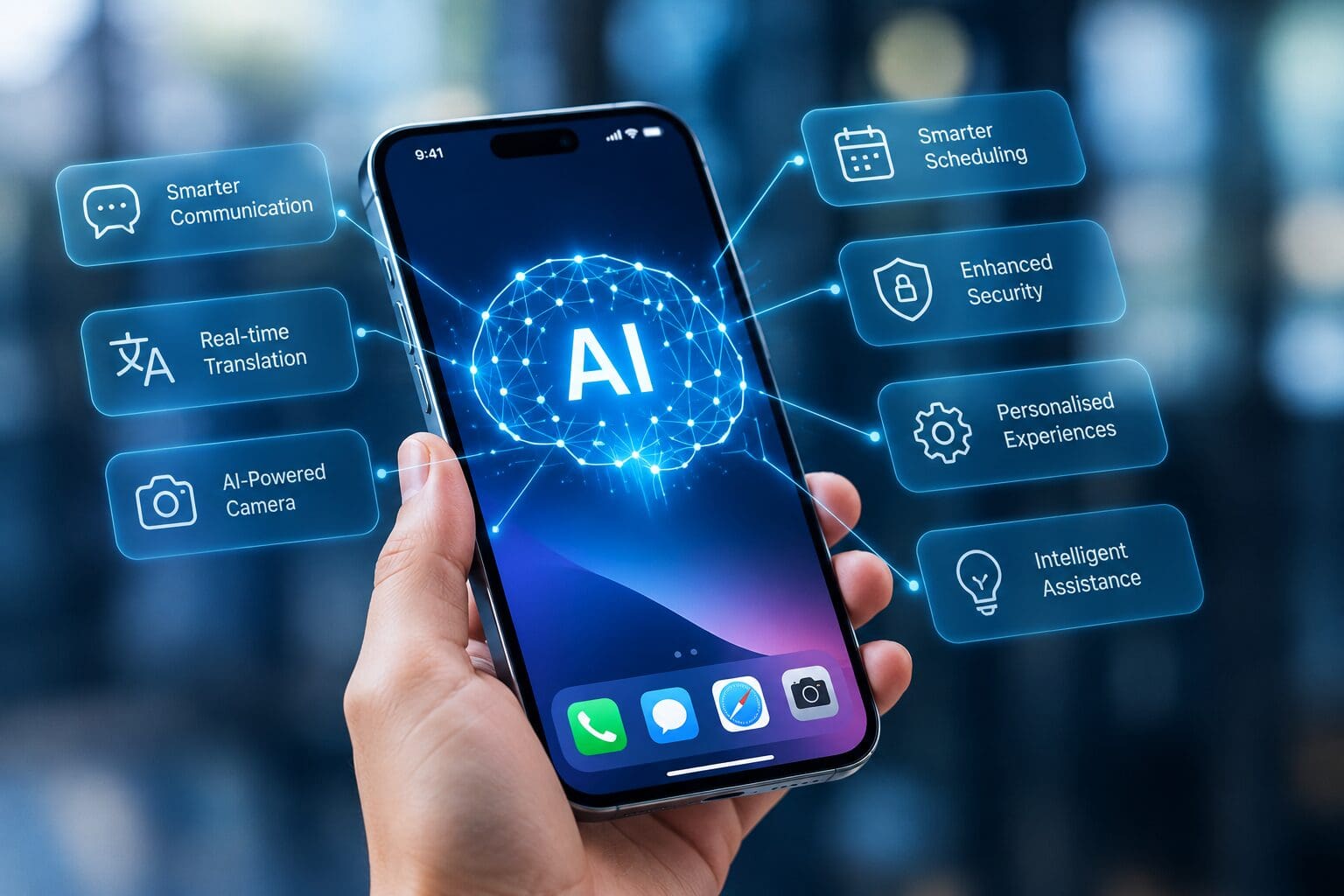
AI agents are coming to your company mobile devices. Here’s how to stay in control
For fifteen years, the smartphone waited for you to tap. That is changing. In 2026, the major phone platforms began shipping AI agents, software that can take a request like “book a car to the airport” or “reorder last week’s supplies” and carry it out across several apps on its own. For people, that is a convenience. For organisations, it is a new kind of risk sitting on every company phone. An agent that can read the screen and act inside email, calendar and business apps can also move company data in ways your mobile policies were never written for.
The good news: if your phones are company-owned and properly managed, you have the tools to stay in control. Here is what has changed, why it matters, and how a Managed Mobility Service (MMS) approach keeps it in hand.
What changed in 2026
Every major platform moved from assistants that answer to agents that act.
- Android. With the Galaxy S26, Samsung and Google launched Gemini task automation. Users ask for something, and Gemini works through the apps in the background, asking for approval before it completes the action. Google has since rolled these features out across its latest Pixel phones and other Android flagships.
- iPhone. Apple rebuilt Siri for iOS 27. Siri AI runs on Apple’s own models, both on the device and on Apple’s Private Cloud Compute servers, and can take actions inside apps. iOS 27 also lets users choose a third-party AI provider to power it.
- The chips. Qualcomm and other chipmakers are now designing phone processors around always-on personal agents, which means this capability will only become more common in the devices you buy.
Most of these agents still ask the user to confirm before acting. But the direction is clear: the phone is becoming something that does work on the user’s behalf, using the data and apps it can reach.
Why it matters for company mobile devices
AI agents change what a phone can do with company data, and mobile policy has to catch up. Five issues stand out.
- Agents reach business data. An agent can read what is on screen and act across email, calendar, CRM and other business apps. Anything it can see, it can use.
- New features arrive switched on. AI capabilities land through routine OS updates and are often enabled by default. Unless a policy says otherwise, employees get them automatically.
- Not everything can be controlled yet. On iPhone, some Apple Intelligence features, including enhanced Siri, currently have no MDM setting to block them. The controls exist for many features, but not all.
- Users can choose their own AI provider. In iOS 27, a user can route requests to a third-party AI service. Company information typed or spoken into Siri could then fall under that provider’s data terms instead of Apple’s.
- The rules change with every release. Each major iOS and Android update adds new AI features and, sometimes, new controls. A policy set once will not stay current.
There is one important dividing line: who owns the device. Apple’s AI restrictions apply only to supervised, company-owned iPhones, and on Android the strongest separation comes from a fully managed device or work profile. Personal phones used for work (BYOD) are much harder to govern. Organisations with a corporate-owned fleet start from a strong position.
How to manage it: the Managed Mobility Service approach
AI governance on mobile is not a one-off setting. It is an ongoing service that touches policy, devices, costs and support, which is exactly what a Managed Mobility Service is built to handle.
Set an AI policy baseline. Decide which AI features and which AI providers are allowed, restricted or blocked on iOS and Android, then enforce those decisions through your MDM. On Android, keep personal AI agents out of the work profile. On iPhone, use supervision so Apple’s restrictions actually apply.
Watch every OS release. Review each major iOS and Android update as it arrives. Flag new AI features, check whether controls exist for them, and adjust the policy before employees start using them. Where no control exists yet, say so plainly and agree how to manage the gap.
Buy agent-ready devices on purpose. The most capable on-device AI needs recent flagship hardware. Knowing which devices in your fleet can and cannot run specific features makes refresh planning and device financing decisions clearer.
Keep AI costs visible. When employees pick their own AI apps and subscriptions, spend drifts onto expense claims. Tracking AI subscriptions alongside mobile costs lets you consolidate onto approved, business-grade agreements.
Prepare the helpdesk. Users will need help when an agent does something unexpected or cannot reach a work app. Your support team should know the new features, have clear triage steps, and know how to escalate a suspected data exposure.
Why European organisations should act now
Irish and European organisations have a short window that others did not. Apple’s new Siri AI did not launch in the EU on iPhone or iPad at release. When it does arrive, it will reach your employees through an ordinary iOS update.
Android is a different story. Gemini agents are already live on current Android flagships, including devices many organisations are managing today.
The practical advice is simple: set your AI policy before the features reach your fleet, not after employees have already switched them on.
Where to start
The easiest first step is an AI-readiness review of your mobile fleet. It covers three things:
- Fleet check: which devices you have, which AI features are active on them, and where the gaps are.
- Policy settings: a clear set of allow, restrict and block decisions that fits your business and your regulatory obligations.
- Rollout plan: changes timed to your OS updates and device refresh cycle.